Forest Landscape Planning Told Through the Story of the Wolf Pack: Coordination and Shared Purpose
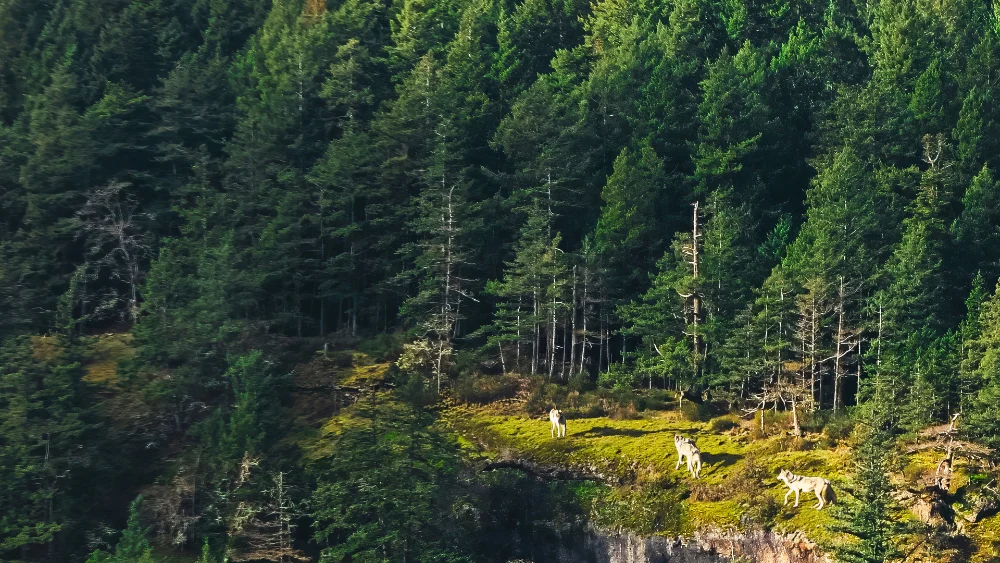
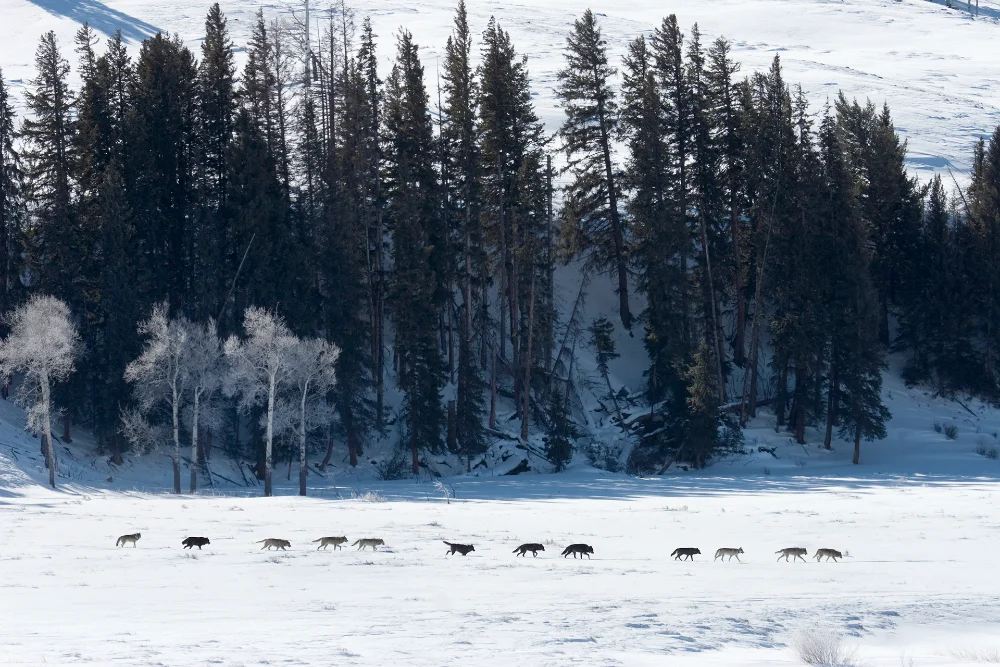
They hunt, raise young, and protect territory as a unit, with each member playing a role. (Symbolism: Collective leadership, strategy, shared responsibility, long-term stewardship).
A Wolf pack offers a relatable way to understand Forest Landscape Planning, showing how a group can work together across a large, shared territory with a common purpose. No single wolf oversees everything, but the pack stays connected through communication, trust, and a shared goal, much like how Forest Landscape Planning brings together different partners, values, and areas into one approach.
Each wolf has a role, but those roles can shift as needed, reflecting the flexibility and collaboration required in planning. Their ability to turn coordination into action, especially when working together to hunt, mirrors the need to connect big picture direction with what happens on the ground. In both cases, success depends on working together in a way that supports the long-term health and balance of the whole system.
About the Artist: Bayja Morgan-Banke
Bayja Morgan-Banke, an artist Toquaht, Nuu-chah-nulth Nation, and Bonaperte Nations, grew up in Tofino in a family where creativity was a way of life. Her grandmother painted and sang, while her father and grandfather were skilled carvers.
With an educational background in film and animation, Bayja now works as an illustrator at Indigenous Marketing Solutions. She’s passionate about preserving Indigenous languages and tells stories through her art, blending traditional techniques with animated styles. Each piece she creates honours her cultural heritage and connects the past with the present.
Bayja’s art is both heartfelt and hopeful, celebrating Indigenous traditions while imagining a future where these stories continue to thrive.
A Forest Landscape Plan (FLP) is a new long-term, landscape-level plan with a forestry focus that considers cumulative impacts on water, biodiversity, cultural values, and other important factors. The FLP process identifies where timber harvesting, conservation, and other important values should occur across the landscape. It also sets limits and guidelines to help direct forestry operations. Once in place, FLPs will legally replace existing Forest Stewardship Plans (FSPs).
The FLP process allows First Nations within the plan area to collaboratively develop a plan with the BC government through the Ministry of Forests (MOF), with input from forest tenure holders in the FLP area—something that was not done under FSPs.
FLPs are designed to make it easier for First Nations and stakeholders to manage a range of forest values, understand and project future forest conditions, and track forest operations at the landscape level. The goal is to develop a plan through a collaborative and inclusive process that balances ecological health, cultural values, and human needs across defined landscapes.
Under the FSP system, this approach was less effective because it relied on meeting general requirements under the Forest and Range Practices Act (FRPA) at the forest development unit (FDU) level to support operational planning (such as cutting permits and road permits). FSPs are tied to licensee operating areas and often overlap, contributing to coordination challenges and confusion for affected First Nations and stakeholders.
FLPs aim to create more holistic and collaborative goals and objectives that are measurable and verifiable across defined landscapes. These plans focus on building resilient forest ecosystems for future generations of people and wildlife. In addition to timber objectives, FLPs are designed to address important non-timber values such as water stewardship, cultural fire, and wildlife habitat. These elements contribute to ecosystem resilience and more directly support First Nations rights to hunt, trap, and use the land for sustenance, cultural, and spiritual purposes.
In 2021, the formal FLP process was introduced by the MOF through legislative modernization efforts. The provincial government continues to fund and administer the process and has identified it as an ongoing priority. As of early 2026, six plans are in progress, with only one completed, and large areas of the province have not yet begun the process. In 2021, the formal FLP process was introduced by the MOF through legislative modernization efforts. The provincial government continues to fund and administer the process and has identified it as an ongoing priority. As of early 2026, six plans are in progress, with only one completed, and large areas of the province have not yet begun the process.
Once completed, an FLP replaces existing Forest Stewardship Plans within the planning area. It is intended to act as a bridge between high-level land use planning and operational, on-the-ground forestry activities (Forest Operations Plans, or FOPs). An FLP is not a land use plan.
For many First Nations, FLPs represent an opportunity to help define values and priorities, build partnerships, and increase co-management of forestry within their territories.
Unlike traditional forestry planning, which often focuses on individual harvest areas, FLPs examine entire watersheds, forest ecosystems, and landscape units that reflect ecological and geographic realities. They also project future forest conditions in ways that help inform management decisions.
This broader, landscape-scale approach aligns with the perspectives of many First Nations, who view their territories as interconnected systems where land, water, plants, animals, and people are closely linked. In some cases, FLP areas may align with traditional territorial boundaries or include shared or overlapping territories.
Effective landscape-level planning considers
Ecological scales needed to manage and protect:
Wildlife habitat and the range of forest stages that support it
Watersheds that maintain clean, reliable water and fish habitat
Cultural and spiritual values (such as traditional foods, plants, medicines, and fire practices), and the transfer of knowledge across generations
Expected future forest conditions
Trade-offs between ecological and socioeconomic values, integrated through spatial planning
First Nations view forests as living ecosystems that include villages, trails, harvesting areas, medicines, sacred places, and cultural histories. They also recognize the challenges facing plants, wildlife, fish, and other species due to cumulative impacts from forest harvesting, wildfires, drought, and events such as the Mountain Pine Beetle epidemic.
First Nations stewardship knowledge, interests, and responsibilities come from inherent rights, legal traditions, and long-standing relationships with the land, water, and air—not from provincial laws or policies.
While an FLP does not define or grant rights, it can provide a structured forum where:
First Nations knowledge systems are considered alongside Western science
Cultural values are identified and mapped at the landscape scale
Objectives reflect both ecological and cultural priorities
Decision-making supports partnership approaches
Meaningful participation in an FLP can influence how forestry is managed in ways that better reflect First Nations stewardship values. Moving from FSPs to collaborative FLPs represents an important improvement over the previous system.
A key feature of FLPs is the partnership-based planning approach between First Nations, the Province, and forest licensees. While models may vary by planning area, FLPs are intended to move beyond project-by-project consultation toward structured partnerships between First Nations and the MOF.
The shared goal is to manage and maintain forest ecosystems that are more resilient to climate change while supporting future timber supply and sustaining people, wildlife, and other species that depend on these ecosystems.
From a governance perspective, FLPs provide:
Joint development of values
Joint development of objectives
Shared technical working groups
Agreed-upon monitoring and adaptive management frameworks
Greater transparency in decision-making
FLPs do not replace broader processes related to First Nations rights, title, or treaties. However, they provide a practical way to advance shared planning and decision-making in forestry today. Legislative changes, evolving policy frameworks, and increasing pressures from cumulative impacts—such as harvesting, wildfires, insects, and disease—have made it both possible and urgent for First Nations, the BC government, and forest licensees to work together on forest landscape planning and governance.
First Nations stewardship is guided by a holistic, long-term perspective developed over generations. This approach recognizes that everything is connected and emphasizes responsibility to future generations.
Forest Landscape Planning, when effectively implemented, can support long-term stewardship by:
Establishing clear objectives for future forest conditions and ecosystem resilience
Incorporating monitoring and adaptive management
Addressing cumulative impacts at the landscape level
Considering how today’s decisions affect future generations
Supporting a stable, predictable, and sustainable timber supply and related economic benefits
This intergenerational perspective aligns closely with Indigenous stewardship principles and strengthens the case for thoughtful, durable FLP frameworks.
When approached strategically, forest landscape planning can contribute to more resilient forest ecosystems, stronger relationships between First Nations and the BC government, and clearer, measurable goals for all forest licensees, First Nations, and other land users. These outcomes can be supported through ongoing monitoring and adaptive management.
Forest Landscape Planning (FLP) represents a significant shift in how forestry is planned and monitored in British Columbia. For many First Nations, the decision to participate is a strategic, long-term choice related to protecting forest ecosystems.
This module outlines key reasons to participate, reasons some Nations may choose not to, and common misconceptions.
Why Participate in an FLP?
Current Forest Stewardship Plans (FSPs) are the main operational planning mechanism under the Forest & Range Practices Act (FRPA) across the province.
FSPs were not designed to fully protect, restore, or address the Section 35 rights of First Nations across most of BC. They are based on legislated FRPA values, higher-level plan orders, and a limited definition of cultural heritage values. They are also generally developed without direct First Nations input on stewardship priorities or ecosystem protection.
The administrative structure and approval process for FSPs is narrowly defined and formulaic. It focuses on FRPA values but does not address broader issues such as timber supply strategies or outcome-based monitoring.
An FLP will not fully resolve Section 35 rights held by First Nations, but it will be a measurable improvement over current forest management under FSPs, particularly through:
Landscape-level planning that breaks larger Timber Supply Areas (TSAs) into more manageable planning units, allowing for different levels of protection
Explicit goal setting with measurable and verifiable indicators co-developed between First Nations and the MOF
Integration of cultural and ecological values
Development of monitoring and adaptive management plans between First Nations and the MOF
FLPs are expected to guide forestry decision-making, including future timber supply, within defined planning areas over 10-year cycles.
Currently, the BC government (MOF) is funding 13 FLP tables: four pilot FLPs (pre-2021) and nine planning tables.
Current FLP pilot funding includes:
Government-funded facilitation teams (facilitator and assistant)
Government-funded technical experts
Data support, FLP modelling, and Vegetation Resource Inventory (VRI) support
Shared-cost arrangements for additional expertise
Funding is limited due to current budget constraints. Priority is currently focused on completing active pilots and applying lessons learned to improve future FLP processes.
While participation under DRIPA may help prioritize funding for First Nations, a standardized future FLP process may require Nations to fund similar work independently.
If your First Nation’s territory lies within an FLP boundary, forestry activities will continue whether or not you participate in the process. It is therefore beneficial to fully engage in the FLP process.
FLP participation helps ensure:
Priority areas are identified
Core cultural and ecological values are mapped
Forestry licensees understand expectations within the FLP area
Your Nation helps define landscape-level objectives and future forest conditions that are measurable and verifiable
Without participation, forestry will continue under existing FSPs developed under FRPA without early First Nations involvement.
Under FLPs, First Nations work directly with:
The Ministry of Forests
Other BC ministries
Existing forest licensees
This collaboration is used to identify core values, co-develop objectives, and implement monitoring across the landscape.
This represents a shift from FSPs, where structure, clarity, monitoring, and enforcement have often been viewed as insufficient, including by the Forest Practices Board of BC.
Effective FLP monitoring allows:
Measurement of whether goals are being met
Adjustments if outcomes are not aligned with objectives
Joint problem-solving at watershed and landscape scales
This creates greater transparency and accountability. BC’s forest professionals require support from First Nations and the MOF in applying adaptive forest management under FLPs.
An FLP can:
Identify old-growth management priorities
Clarify protected or sensitive areas
Balance timber supply and ecological values
Reduce uncertainty for industry
Forest Operations Plans (FOPs), which follow FLPs, will identify future road and block planning consistent with the landscape plan. When expectations are clear at the FLP level, block-by-block referral conflicts are expected to decrease, improving clarity, transparency, and certainty overall.
Why Some Nations May Choose NOT to Participate
Participation is voluntary. Some Nations may reasonably decide not to engage in an FLP.
FLPs address forest management but do not fully address:
Mining
Energy
Fisheries
Transportation corridors
Broader land and water governance
Some Nations may prefer a comprehensive Land Use Plan (LUP) that covers all sectors.
However, current provincial funding and momentum are focused on FLPs, not full LUP modernization. BC budget constraints may also limit the development of new LUPs.
Some First Nations already have strong internal forest management frameworks that go beyond FSPs and are respected by forest licensees.
For example:
Simpcw First Nation has developed internal planning approaches for forest licensees to follow
Adams Lake Indian Band operates in areas where alternative forestry approaches may be possible due to the absence of approved Land Use Plans (LUPs)
Where strong Nation-led forest management systems already exist, an FLP may offer fewer additional benefits, although it may also provide a way to integrate existing work into a formal legal framework.
FLPs require:
Significant staff time (often 2–3 days per week for engagement in MOF tables, technical working groups, and internal First Nation processes)
Ongoing technical review at both planning table and technical working group levels
Internal reporting to leadership and membership
Long-term monitoring commitments with the MOF and other First Nations
If a First Nation does not have sufficient capacity, participation may stretch resources—especially when involved in multiple FLPs. Some Nations are participating in two FLP tables, which can significantly increase workload.
Dispelling Common Myths
Myth 1: “FLPs fully solve Section 35 issues.”
Reality: FLPs improve stewardship planning compared to FSPs, but they do not replace broader rights, title, or governance negotiations.
Myth 2: “We can wait for a better process later.”
Reality: Funding and political support are strongest now. FLPs are a key part of current forest policy change in BC. Participation helps shape the process. Future processes are uncertain.
Myth 3: “If we don’t participate, forestry stops.”
Reality: Forestry will continue under existing FSPs and future FLPs.
Myth 4: “FLPs lock us in permanently.”
Reality: FLPs are reviewed on a 10-year cycle. They are updated or replaced based on monitoring and changing conditions, in collaboration between First Nations and the MOF.
Strategic Questions for Leadership
Before deciding, consider:
Do current FSPs on our lands adequately protect our values and rights?
Do we want influence over forestry in our territory over the next 5–10 years?
Do we have the capacity to engage meaningfully?
Is waiting for broader land use planning realistic given our stewardship goals?
What are the risks of not participating?
Final Considerations
FLPs are not perfect and are not comprehensive land use plans. They will not resolve all governance issues.
However, FLPs represent:
Structured co-development with the MOF and other First Nations
Improved stewardship and monitoring of the land
More predictable and sustainable timber supply and economic benefits
A tangible improvement over most existing FSPs
Each First Nation must decide whether participation aligns with its strategic priorities, governance capacity, and long-term stewardship vision.