Module 2. Why or Why Not Participate
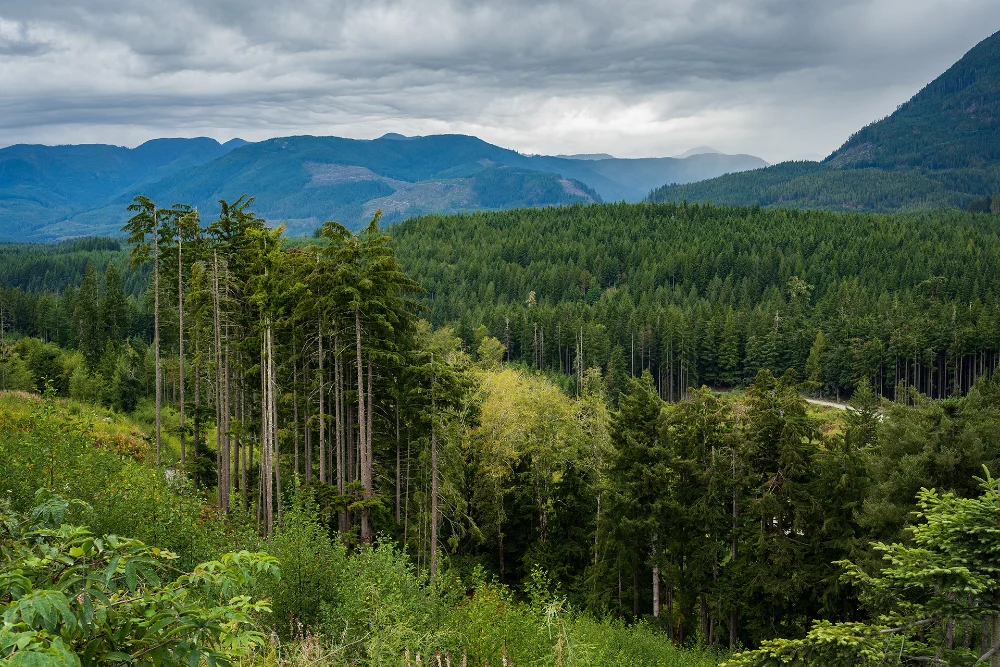
Forest Landscape Planning (FLP) represents a significant shift in how forestry is planned and monitored in British Columbia. For many First Nations, the decision to participate is a strategic, long-term choice related to protecting forest ecosystems.
This module outlines key reasons to participate, reasons some Nations may choose not to, and common misconceptions.
Why Participate in an FLP?
Current Forest Stewardship Plans (FSPs) are the main operational planning mechanism under the Forest & Range Practices Act (FRPA) across the province.
FSPs were not designed to fully protect, restore, or address the Section 35 rights of First Nations across most of BC. They are based on legislated FRPA values, higher-level plan orders, and a limited definition of cultural heritage values. They are also generally developed without direct First Nations input on stewardship priorities or ecosystem protection.
The administrative structure and approval process for FSPs is narrowly defined and formulaic. It focuses on FRPA values but does not address broader issues such as timber supply strategies or outcome-based monitoring.
An FLP will not fully resolve Section 35 rights held by First Nations, but it will be a measurable improvement over current forest management under FSPs, particularly through:
- Landscape-level planning that breaks larger Timber Supply Areas (TSAs) into more manageable planning units, allowing for different levels of protection
- Explicit goal setting with measurable and verifiable indicators co-developed between First Nations and the MOF
- Integration of cultural and ecological values
- Development of monitoring and adaptive management plans between First Nations and the MOF
FLPs are expected to guide forestry decision-making, including future timber supply, within defined planning areas over 10-year cycles.
Currently, the BC government (MOF) is funding 13 FLP tables: four pilot FLPs (pre-2021) and nine planning tables.
Current FLP pilot funding includes:
- Government-funded facilitation teams (facilitator and assistant)
- Government-funded technical experts
- Data support, FLP modelling, and Vegetation Resource Inventory (VRI) support
- Shared-cost arrangements for additional expertise
Funding is limited due to current budget constraints. Priority is currently focused on completing active pilots and applying lessons learned to improve future FLP processes.
While participation under DRIPA may help prioritize funding for First Nations, a standardized future FLP process may require Nations to fund similar work independently.
If your First Nation’s territory lies within an FLP boundary, forestry activities will continue whether or not you participate in the process. It is therefore beneficial to fully engage in the FLP process.
FLP participation helps ensure:
- Priority areas are identified
- Core cultural and ecological values are mapped
- Forestry licensees understand expectations within the FLP area
- Your Nation helps define landscape-level objectives and future forest conditions that are measurable and verifiable
Without participation, forestry will continue under existing FSPs developed under FRPA without early First Nations involvement.
Under FLPs, First Nations work directly with:
- The Ministry of Forests
- Other BC ministries
- Existing forest licensees
This collaboration is used to identify core values, co-develop objectives, and implement monitoring across the landscape.
This represents a shift from FSPs, where structure, clarity, monitoring, and enforcement have often been viewed as insufficient, including by the Forest Practices Board of BC.
Effective FLP monitoring allows:
- Measurement of whether goals are being met
- Adjustments if outcomes are not aligned with objectives
- Joint problem-solving at watershed and landscape scales
This creates greater transparency and accountability. BC’s forest professionals require support from First Nations and the MOF in applying adaptive forest management under FLPs.
An FLP can:
- Identify old-growth management priorities
- Clarify protected or sensitive areas
- Balance timber supply and ecological values
- Reduce uncertainty for industry
Forest Operations Plans (FOPs), which follow FLPs, will identify future road and block planning consistent with the landscape plan. When expectations are clear at the FLP level, block-by-block referral conflicts are expected to decrease, improving clarity, transparency, and certainty overall.
Why Some Nations May Choose NOT to Participate
Participation is voluntary. Some Nations may reasonably decide not to engage in an FLP.
FLPs address forest management but do not fully address:
- Mining
- Energy
- Fisheries
- Transportation corridors
- Broader land and water governance
Some Nations may prefer a comprehensive Land Use Plan (LUP) that covers all sectors.
However, current provincial funding and momentum are focused on FLPs, not full LUP modernization. BC budget constraints may also limit the development of new LUPs.
Some First Nations already have strong internal forest management frameworks that go beyond FSPs and are respected by forest licensees.
For example:
- Simpcw First Nation has developed internal planning approaches for forest licensees to follow
- Adams Lake Indian Band operates in areas where alternative forestry approaches may be possible due to the absence of approved Land Use Plans (LUPs)
Where strong Nation-led forest management systems already exist, an FLP may offer fewer additional benefits, although it may also provide a way to integrate existing work into a formal legal framework.
FLPs require:
- Significant staff time (often 2–3 days per week for engagement in MOF tables, technical working groups, and internal First Nation processes)
- Ongoing technical review at both planning table and technical working group levels
- Internal reporting to leadership and membership
- Long-term monitoring commitments with the MOF and other First Nations
If a First Nation does not have sufficient capacity, participation may stretch resources—especially when involved in multiple FLPs. Some Nations are participating in two FLP tables, which can significantly increase workload.
Dispelling Common Myths
Myth 1: “FLPs fully solve Section 35 issues.”
Reality: FLPs improve stewardship planning compared to FSPs, but they do not replace broader rights, title, or governance negotiations.
Myth 2: “We can wait for a better process later.”
Reality: Funding and political support are strongest now. FLPs are a key part of current forest policy change in BC. Participation helps shape the process. Future processes are uncertain.
Myth 3: “If we don’t participate, forestry stops.”
Reality: Forestry will continue under existing FSPs and future FLPs.
Myth 4: “FLPs lock us in permanently.”
Reality: FLPs are reviewed on a 10-year cycle. They are updated or replaced based on monitoring and changing conditions, in collaboration between First Nations and the MOF.
Strategic Questions for Leadership
Before deciding, consider:
- Do current FSPs on our lands adequately protect our values and rights?
- Do we want influence over forestry in our territory over the next 5–10 years?
- Do we have the capacity to engage meaningfully?
- Is waiting for broader land use planning realistic given our stewardship goals?
- What are the risks of not participating?
Final Considerations
FLPs are not perfect and are not comprehensive land use plans. They will not resolve all governance issues.
However, FLPs represent:
- Structured co-development with the MOF and other First Nations
- Improved stewardship and monitoring of the land
- More predictable and sustainable timber supply and economic benefits
- A tangible improvement over most existing FSPs
Each First Nation must decide whether participation aligns with its strategic priorities, governance capacity, and long-term stewardship vision.